English
  العربية
  简体中文
简体中文  Français
  Deutsch (Sie)
  Русский
  Español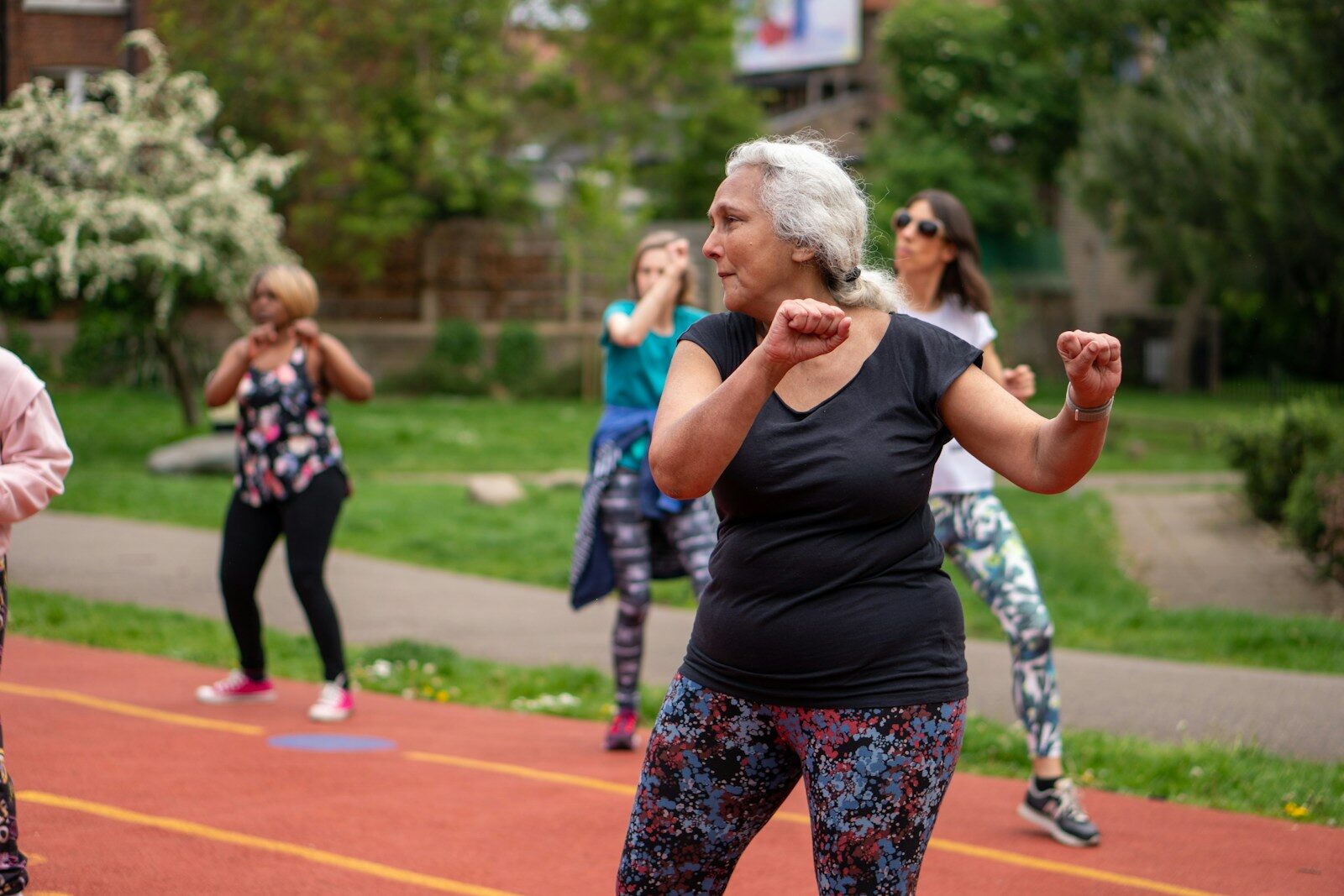
Physical activity is essential for maximising health, wellbeing and independence in older age – even small amounts help, and balance-focused exercise is especially effective for preventing falls. Yet many older adults struggle to stay active, and broad participation remains a challenge. So how can we better support older people to move more?
Research, from our group and others, has identified three key strategies for driving uptake and longer-term engagement:
1. Person-centered health coaching with goal-setting
Health coaching can kickstart and support older people to be active. It does this by identifying meaningful goals that fit with each person’s personality and circumstances, by setting and celebrating small goals, by building on strengths, and by collaborative problem solving around barriers. Our Coaching for Healthy AGEing (CHAnGE) trial showed that person-centered health coaching can significantly boost physical activity in older adults [1]. Participants described how supported they felt and how their confidence to become and stay physically active was built [2]. As one older woman put it,
[The coach] is not expecting or demanding or being patronising . . . She doesn’t make me feel like she’s trying to teach me anything, because mostly I know the stuff I need to do. She’s simply talking to me like a friend, trying to find ways to help me achieve my goals, and in a very gentle and humorous, playful way…. It’s just very refreshing having that kind of support. [3]
2. Offering a diverse range of physical activity options which appeal to different interests
Older adults are not a homogenous group – they vary widely in their capacity to be active, the goals that motivate them and the barriers they face. This demands a broad range of community-based programs and services which offer real choices. Accessibility and appeal are both central concerns, including affordability, good transport and appropriately trained professionals who can tailor support to suit individual needs. Studies increasingly show how connection to nature can support physical activity [4], and we have found that programs which offer fun, creativity and mindfulness are appealing to many [5]. For example, participants in our SAGE yoga-based exercise program valued the tranquility, embodiment and mindfulness of yoga practice [6, 7]. While our evaluation of community-based dance for healthy ageing found that mechanisms such as defying expectations, playfulness, synchrony and musical reactivity were powerful drivers for sustained engagement [8]. One 84-year-old participant explained her experience like this,
It’s just everybody there dancing together and … smiling, enjoying the music…. There’s a lot of laughter…. You sometimes think, “Ooh, dear. Fancy me doing this at my age! I’m supposed to be old and steadfast and whatever, but here I am acting like a teenager….” No, it’s all light-hearted and it’s fun and it’s doing me a lot of good. [8]
3. Maximising opportunities for social connection
Programs that target social connection in combination with physical activity can reduce the loneliness that affects many older people while also boosting motivation and support to be active [9]. Group programs and classes, and ‘buddy systems’ can enhance mutual enjoyment and sustain commitment. We are currently implementing an Australian version of the 选择移动 program which places social connection at the heart of physical activity promotion (https://choosetomove.org.au). And social connection does not necessarily mean physical activity participation with others; many participants who use Fitbits tell us they enjoy sharing their step count data with family and/or peers, sometimes entering into friendly competition which promotes greater activity [10]. Participants across several trials, including our 50 岁以上的活跃女性 trial, explain that platforms such as WhatsApp and Facebook can promote group support, “People can share goals, set each other challenges, check in with each other, ask questions, share tips, feel accountable to the group” [11].
The take-home message is simple: when we meet older adults where they are—with appealing physical activity options and opportunities for social connection—they’re more likely to become and remain active, delivering benefits for individuals and society alike.
参考资料
1. Oliveira JS, Sherrington C, Rissel C, Howard K, Tong A, Merom D, Wickham J, Bauman AE, Lord SR, Lindley RI et al: Effect of a coaching intervention to enhance physical activity and prevent falls in community-dwelling people aged 60+ years: a cluster randomised controlled trial. 英国运动医学杂志 2024, 58(7):382-391.
2. Haynes A, Sherrington C, Wallbank G, Tong A, Merom D, Rissel C, Lester D, Tiedemann A: “Someone’s got my back”: Older people’s experience of the Coaching for Healthy Ageing program for promoting physical activity and preventing falls. Journal of Aging and Physical Activity 2021, 29(2):296-307.
3. Haynes A, Sherrington C, Ramsay E, Kirkham C, Manning S, Wallbank G, Hassett L, Tiedemann A: “Sharing Success with Someone”: Building therapeutic alliance in physiotherapist-delivered physical activity coaching for healthy aging. Physiotherapy Theory and Practice 2021, 38(13):2771-2787.
4. Nguyen P-Y, Astell-Burt T, Rahimi-Ardabili H, Feng X: Effect of nature prescriptions on cardiometabolic and mental health, and physical activity: a systematic review. The Lancet Planetary Health 2023, 7(4):e313-e328.
5. Gilchrist H, Haynes A, Oliveira JS, Grunseit A, Sherrington C, Bauman A, Shepherd R, Tiedemann A: The value of mind-body connection in physical activity for older people. Journal of Aging and Physical Activity 2023, 31:81-88.
6. Haynes A, Gilchrist H, Oliveira JS, Grunseit A, Sherrington C, Lord S, Tiedemann A: What helps older people persevere with yoga classes? A realist process evaluation of a COVID-19-affected yoga program for fall prevention. BMC Public Health 2022, 22(463).
7. Haynes A, Gilchrist H, Oliveira JS, Sherrington C, Tiedemann A: “I wouldn’t have joined if it wasn’t online”: understanding older people’s engagement with teleyoga classes for fall prevention. BMC Complementary Medicine and Therapies 2022, 22(283).
8. Haynes A, Tiedemann A, Hewton G, Chenery J, Sherrington C, Merom D, Gilchrist H: “It doesn’t feel like exercise”: a realist process evaluation of factors that support long-term attendance at dance classes designed for healthy ageing. Frontiers in Public Health 2023, 11(1284272).
9. Ahn J, Falk EB, Kang Y: Relationships between physical activity and loneliness: A systematic review of intervention studies. Current Research in Behavioral Sciences 2024, 6:100141.
10. Haynes A, Gilchrist H, Oliveira JS, Sherrington C, Tiedemann A: Avoiding God’s waiting room: Lessons from the lived experiences of older people who use digital technology to support physical activity. Physical Activity and Health 2023, 7(1):24–42.
11. Haynes A, Wallbank G, Gilchrist H, Sherrington C, West CA, Oliveira JS, O’Rourke S, Tiedemann A: What do older women want from a physical activity program? Stakeholder consultation to optimise design and recruitment for the Active Women over 50 trial. BMC Public Health 2024, 24(1):2920.
作者
Anne Tiedemann, PhD, is Professor of Physical Activity and Health in the Faculty of Medicine and Health, University of Sydney. Over the past 20 years Professor Tiedemann has led research exploring the design and evaluation of low cost, scalable strategies for preventing falls and increasing physical activity for people aged 50 years and over.
Professor Tiedemann has authored 185+ research publications that are cited over 35,000 times, and she was on the development committee for the 2020 World Health Organization Physical Activity and Sedentary Behaviour Guidelines and for the soon to be released Australian 24-hour Movement Guidelines.
Abby Haynes, PhD, is a Research Fellow at the Institute for Musculoskeletal Health, The University of Sydney. She is an experienced qualitative researcher and evaluator with a background in allied health. Her current work focuses on understanding how physical activity interventions work (or why they don’t work) for older people and those with disability in health, aged care and community settings. Dr Haynes has authored 70+ papers with over 2200 citations.
Heidi Gilchrist, PhD, is a physiotherapist and senior lecturer in public health at the University of Sydney. Her research investigates how older adults engage with physical activity, using qualitative and mixed methods to inform policy and practice. Her findings highlight the value of physical activities that bring joy and pleasure through mechanisms such as embodiment, mindfulness, and synchrony—beyond traditional health benefits. Heidi has published 21 peer-reviewed papers, 71% in top-tier journals, and her work has influenced WHO guidelines and national strategies. She also practices clinically in regional NSW, bridging academic research with real-world impact.