English
  العربية
  简体中文
简体中文  Français
  Deutsch (Sie)
  Русский
  Español
World Environment Day, 5 June 2026
Physical activity is one of the most powerful tools available for human health. Decades of evidence confirms that regular movement reduces the risk of cardiovascular disease, cancer, depression, and premature death.
Yet as the climate crisis deepens, there is a need to better understand the cost of physical activity on the planet. It also raises a parallel question which demands attention:
Can physical activity become part of the solution?
The answer is yes, but only if we are precise about which forms we promote.
Not all physical activity carries the same environmental footprint. A person cycling to work burns human energy and produces negligible emissions. A person driving to a temperature-controlled gym, running on an electric treadmill for 45 minutes, then driving home does not. Both accumulate health benefits. Only one contributes to reducing carbon emissions. The distinction matters, and the physical activity community has been slow to make it explicitly.
Naivety here carries real risk: A future in which physical activity becomes increasingly indoor, virtual, and climate-controlled would impose its own considerable environmental cost.
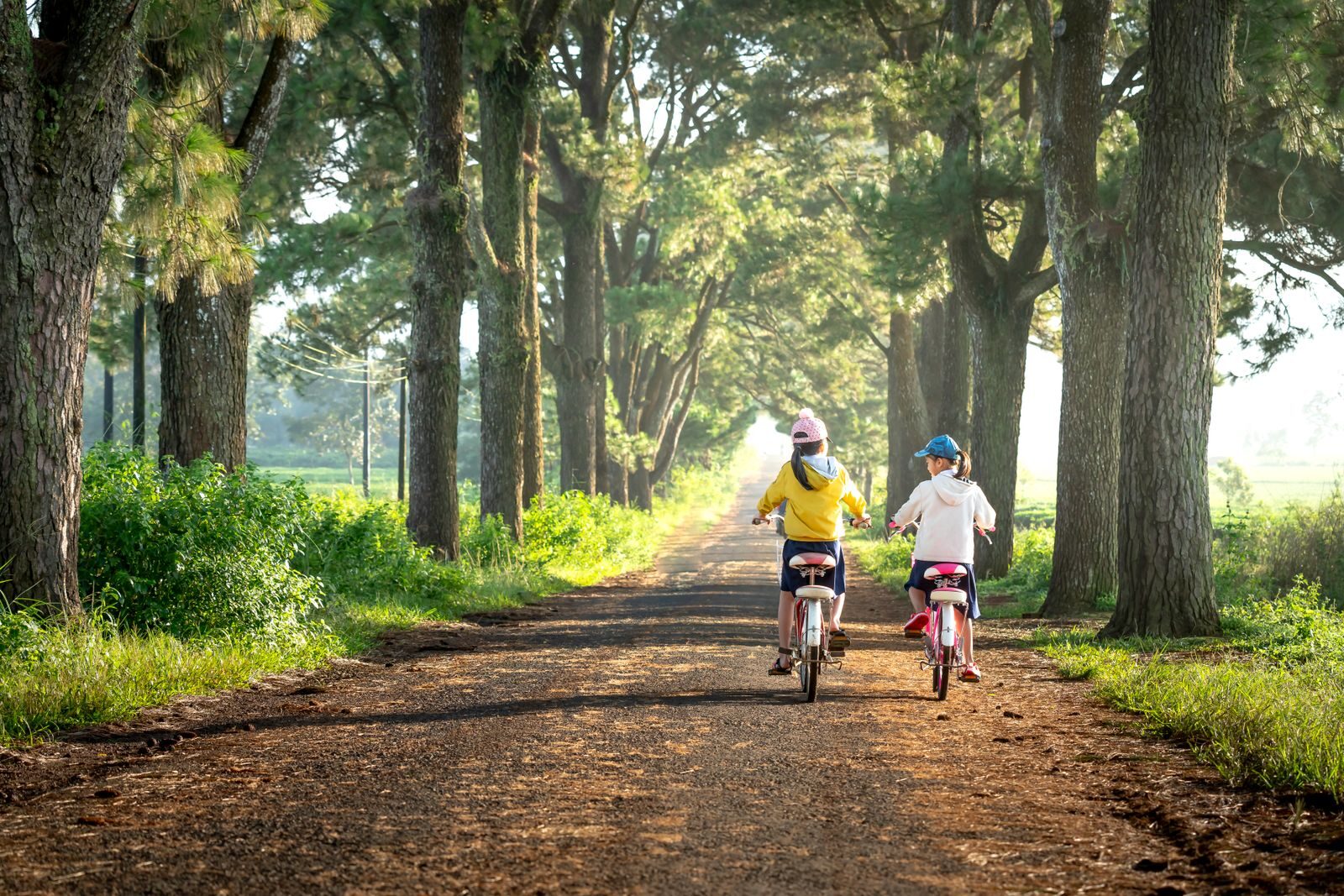

The forms of movement most aligned with planetary health are also among the most accessible: walking, running, and cycling. These require no facility, typically no equipment beyond basic clothing, and no energy source beyond food. Cycling, of course, requires access to a bicycle, which can be a barrier, although initiatives such as shared micro-mobility schemes are becoming increasingly widespread to broaden access to active modes of travel. Active travel promoted through urban design (20-minute neighbourhoods, protected cycle lanes, walkable streets, accessible green space) simultaneously reduces car dependency, cuts emissions, and increases population-level physical activity. The case for active travel is not merely health-based – it is environmental, economic, and social.
Active play in local parks, commuting on foot or by bicycle, and exercising in green urban spaces offer multiple returns simultaneously. The evidence base for their environmental benefit is stronger than for any indoor or facility-dependent alternative.

Policymakers who fund cycle-to-work schemes, pedestrianise city centres, or invest in park infrastructure are not making a trade-off between health and sustainability. They are investing in both at once.
This does not mean all outdoor or green-labelled activity is automatically sustainable. The field should resist the temptation to brand any exercise performed outside as environmentally virtuous without scrutiny of how people got there, what infrastructure supports it, and what energy it consumes.
The evidence base for quantifying the planetary health impacts of different physical activity modes remains limited. That is not a reason to wait. It is a reason to act on the best available logic while the research catches up. Initiatives such as SUPER (Sustainable Physical activity for Equity and Resilience in the Anthropocene) are driving the transformative research needed to reorient physical activity as an asset for planetary health, not just human health. The field needs more of this work, and it needs it to inform policy before the window for low-carbon urban infrastructure closes.
On اليوم العالمي للبيئة, the message for the physical activity community is straightforward:
Walk, run, cycle, and build the cities and policies that make doing so the easiest choice available.
من تأليف:
Professor Sebastien Chastin
Professor of Heath Behaviour Dynamics: People, Places, Systems within the Department of Allied Health Professions at Glasgow Caledonian University, UK.