English
  العربية
  简体中文
简体中文  Français
  Deutsch (Sie)
  Русский
  Español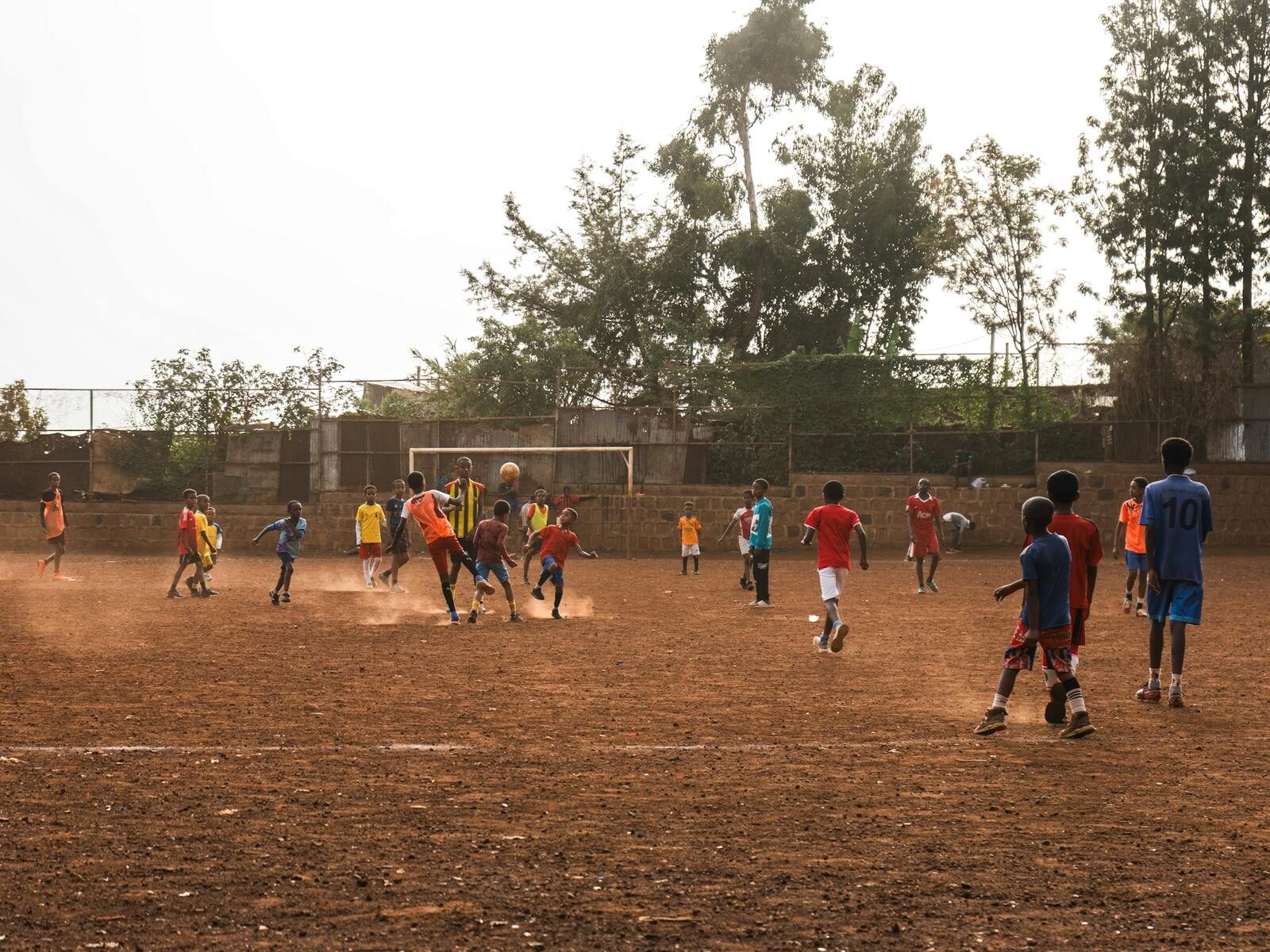
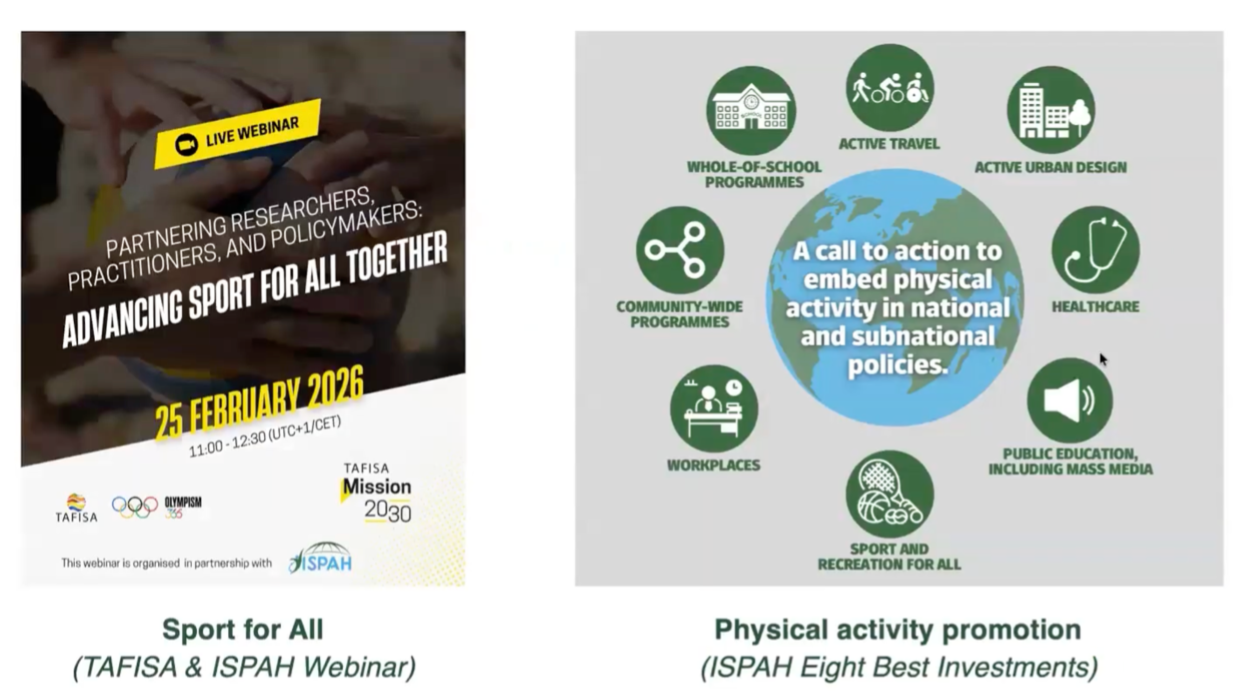
As part of ongoing efforts to strengthen global collaboration in physical activity promotion, the International Society for Physical Activity and Health (ISPAH) partnered with The Association For International Sports for All (TAFISA) to host a Mission 2030 webinar exploring how researchers, practitioners, and policymakers can work more effectively together to advance “Sport for All”.
The global landscape of physical activity is currently facing a silent crisis. Approximately 7% to 9% of annual deaths are linked to physical inactivity, with a staggering 81% of adolescents and 27% of adults failing to meet recommended activity levels. While the problem is often framed solely as a health issue, the TAFISA Mission 2030 Webinar made it clear that inactivity is a multi-dimensional challenge, spanning social, economic, and environmental sectors.
To address this, we must bridge the divide between three key groups: researchers, practitioners, and policymakers.
Defining the “Team”: A Shift in Perspective
The webinar panellists used vivid sports analogies to describe the current state of collaboration. Ben Farai Saunders described the groups as occupying ”different positions but on the same team,” all aiming for the same goal through different roles. Dr Rea Ves offered a family analogy, in which policymakers are grandparents setting the rules, practitioners are parents, and researchers are “uncles or aunts” providing an outside perspective.
However, Dr Stacy Johnson pointed out a harsher reality: often, these groups feel like they are ”playing different sports” with different rules, players, and opponents.
The Implementation Gap: Why Policy Fails
A recurring theme was the “implementation gap”, the disconnect between well-written policy documents and meaningful change on the ground. Several barriers contribute to this:
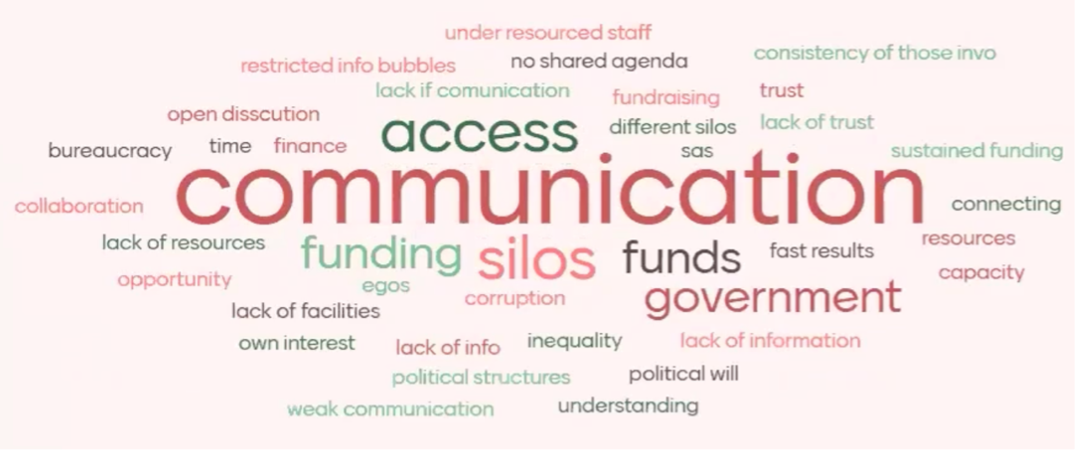
- The Silo Mentality: Stakeholders often work in isolation, lacking the communication mechanisms to connect university researchers with local practitioners.
- Competing Timelines: Researchers may take years to produce a study, while government officials need concrete answers immediately.
- The Knowledge Hierarchy: There is an over-reliance on academic journal articles, which practitioners may find irrelevant or inaccessible compared to applied, program-based research.
- Unintended Consequences: Sven Messing highlighted a $200 million Canadian tax credit designed to promote fitness that failed because it was non-refundable; it essentially “made the rich richer” while failing the low-income groups who needed it most.
Strategies for Meaningful Change
How do we move from theory to impact? The webinar participants highlighted several proven strategies:
- Experience-Based Co-Design
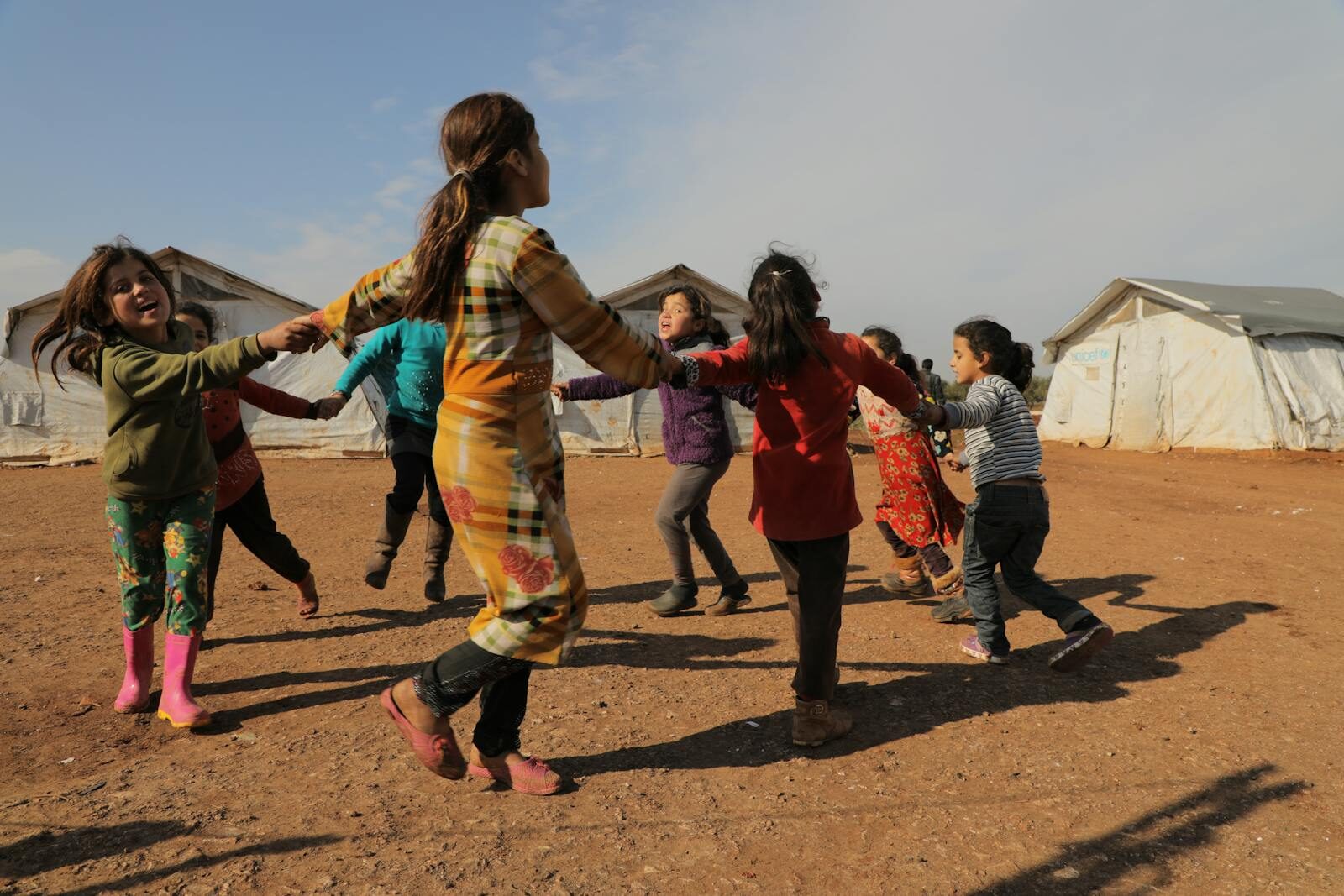
- Research and programs must be designed with the end-user. Professor Simon Rosenbaum shared the success of ”Addi Moves” in Sydney, a “not-gym” for vulnerable populations. By involving refugees, asylum seekers, and people living with mental illness in the design process, they created a space that prioritised psychological and cultural safety. This included simple but vital features like providing toys for children so mothers could exercise and offering referral materials in over 15 languages.
- Translating Research into “Toolkits”
- To influence practice, researchers must go beyond publications. They should provide practical toolkits, including posters, case studies, or Massive Open Online Courses (MOOCs), that practitioners can implement immediately.
- Cultural Adaptation
- Frank Alohi emphasised the need for flexibility when working in fragile contexts like Zanzibar. If cultural norms prevent girls from playing football, practitioners should not force the sport but instead adapt by offering culturally accepted activities like netball or volleyball, building trust with community leaders first.
- Shifting the Funding Bias
- Ben Farai Saunders presented a provocative “elephant in the room”: the massive investment in elite sport versus grassroots sport. While the participatory sports sector is valued at $560 million, four times the value of the elite sector, policy often reflects a bias toward the podium. The panel argued that if we follow the evidence, investment should prioritise ”Sport for All” and community-based development, which offer a much higher return on investment for society.
The Path Forward: Structured Dialogue and Accountability
To make collaboration the norm rather than the exception, Dr Rea Ves advocated for a ”structured dialogue” procedure. This involves creating regular, transparent channels where grassroots actors and NGOs have as much of a voice as Olympic-style federations.
As a researcher working in physical activity and public health, the discussion strongly reinforced the importance of closer collaboration between evidence generation, programme delivery, and policy decision-making. Ultimately, advancing “Sport for All” requires honesty, passion, and a willingness to be critical. We must stop being “evangelical” about sports’ benefits and instead use robust monitoring and evaluation to prove what actually works. By treating researchers, practitioners, and policymakers as one cohesive team, the “Sport for All” movement can move beyond policy documents and deliver real change in communities.
Watch the Webinar and Stay Connected
For those who were unable to attend or would like to revisit the discussion, the full recording of the webinar is available on YouTube. The conversation highlighted the growing importance of stronger collaboration between researchers, practitioners, and policymakers to advance the global “Sport for All” agenda.
TAFISA will also host its next webinar, “From Heritage to Future: Revitalising Traditional Sports and Games for Today’s Youths,” on 22 April 2026, continuing the dialogue on inclusive and culturally relevant approaches to physical activity and sport.
Acknowledgement
This webinar was organised in partnership between International Society for Physical Activity and Health and TAFISA. A special acknowledgement to Prof Liz Orton, whose skilled moderation kept the conversation focused, dynamic, and inclusive throughout.
About the Author
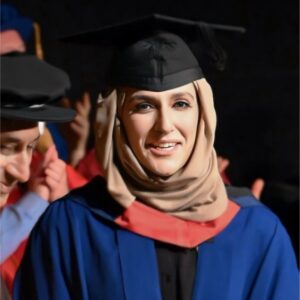
Bushra Ali is a researcher in physical activity and public health and a member of the Capacity Building Committee at International Society for Physical Activity and Health. Her work focuses on physical activity promotion, implementation research, and strengthening collaboration between research, policy, and practice.